
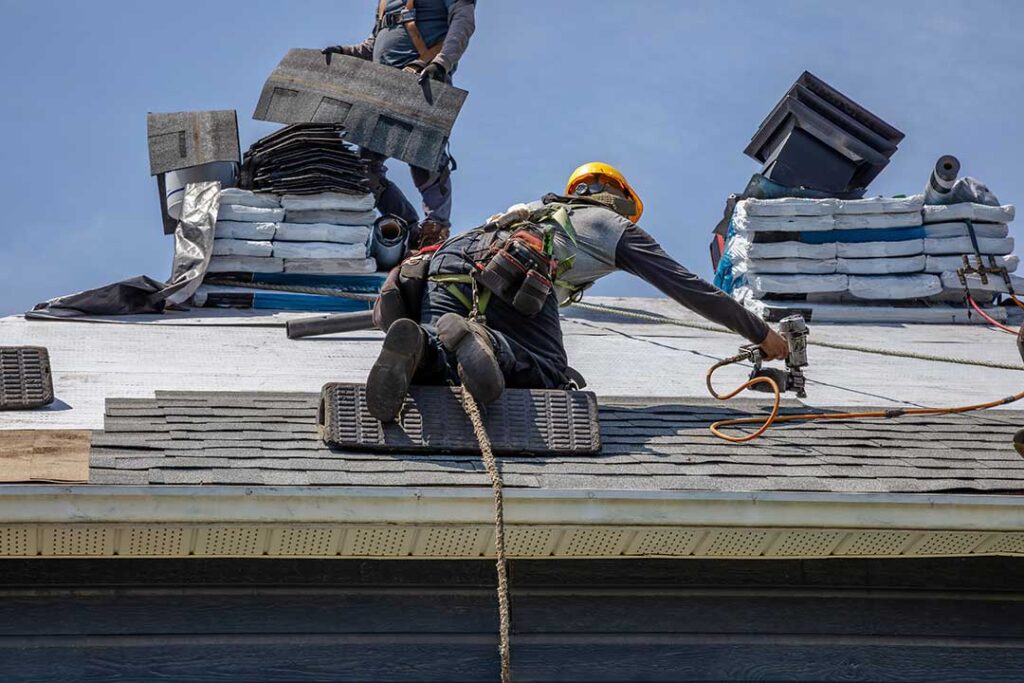
Why weather has such a strong effect on a roof
Weather affects roofing materials through repeated cycles of moisture, temperature change, wind, sunlight, ice, and snow. A roof may appear sound from the ground while small problems are developing beneath shingles, around flashing, or near roof edges.
In Farmington, NY, roofs commonly face a wide range of conditions during the year. Cold winters, freeze-thaw cycles, wet spring weather, summer heat, thunderstorms, and falling leaves can each affect different parts of the roof system. The greatest damage often comes from repetition rather than from one dramatic storm.
A roof is designed to shed water and protect the building below. Its performance depends not only on the outer shingles but also on underlayment, flashing, ventilation, insulation, gutters, and roof structure.
How winter cold and freezing temperatures cause damage
Cold weather can make roofing materials less flexible, while trapped moisture can expand when it freezes. This combination may worsen small cracks, loose tabs, gaps around flashing, and weak seal points.
Snow itself is not always harmful. A properly designed roof can usually carry normal seasonal snow loads. Problems become more likely when snow is unusually deep, wet, or unevenly distributed. Snow drifting against higher roof sections, walls, dormers, or roof valleys can place additional weight in concentrated areas.
Ice dams are another common winter concern. An ice dam forms when heat escapes into the underside of a roof and melts snow on the upper portion. The water flows toward colder eaves, where it refreezes. As the ice thickens, water may back up beneath shingles and enter the attic or upper walls.
Warning signs can include:
- Icicles accompanied by thick bands of ice along the eaves
- Damp attic insulation or darkened roof sheathing
- Water stains near exterior walls or ceiling edges
- Peeling paint or damaged trim below the roofline
- Gutters pulling away because of ice weight
Removing snow or ice from a roof can be hazardous. Walking on icy roofing may damage shingles and create a serious fall risk. Any work involving steep slopes, ladders, electrical hazards, or unstable snow should be treated as a safety issue rather than a routine maintenance task.
What spring rain reveals after winter
Spring rain often exposes damage that developed during the colder months. Moisture may enter through lifted shingles, cracked pipe flashing, deteriorated sealant, or areas where ice previously backed up.
Rain does not need to be heavy to cause a leak. Wind-driven rain can move sideways beneath shingles or around flashing details. Water may then travel along roof decking, rafters, insulation, or wall cavities before appearing indoors. The location of an interior stain does not always identify the exact entry point.
After a wet winter, check for:
- New ceiling or wall discoloration
- Musty odors in the attic
- Damp insulation or visible mold-like growth
- Sagging sections of roof decking
- Loose or missing shingles
- Granules collecting in gutters or downspouts
A roof that does not leak during one rainfall is not necessarily free of damage. Some moisture problems occur only during wind-driven rain, heavy runoff, or specific combinations of wind direction and precipitation.
How summer heat and sunlight wear down roofing
Sunlight and heat gradually age exposed roofing materials. Dark surfaces can become much hotter than the surrounding air, especially when the roof receives direct afternoon sun. Repeated heating and cooling cause materials to expand and contract.
Over time, this movement may contribute to:
- Shingles becoming brittle or curling
- Loss of protective granules
- Cracked rubber or plastic components
- Deterioration around vents and skylights
- Premature aging on south- or west-facing roof sections
Attic temperature also matters. Poor ventilation can allow heat and moisture to build up beneath the roof covering. Excessive attic heat may accelerate shingle aging, while moisture can contribute to wood deterioration and mold growth.
Ventilation does not mean simply adding more openings. Intake and exhaust vents need to work together, and insulation should not block intended airflow. Bathroom and kitchen exhaust should also discharge outdoors rather than into the attic, where warm moisture can condense on colder surfaces.
How wind and thunderstorms affect shingles and flashing
Strong wind can lift shingle edges, loosen ridge caps, damage flashing, and carry branches onto the roof. A roof may suffer damage without losing a large visible section of shingles.
Wind-related problems are more likely around:
- Roof edges and corners
- Ridges and hips
- Valleys
- Areas surrounding chimneys, vents, and dormers
- Older or previously repaired sections
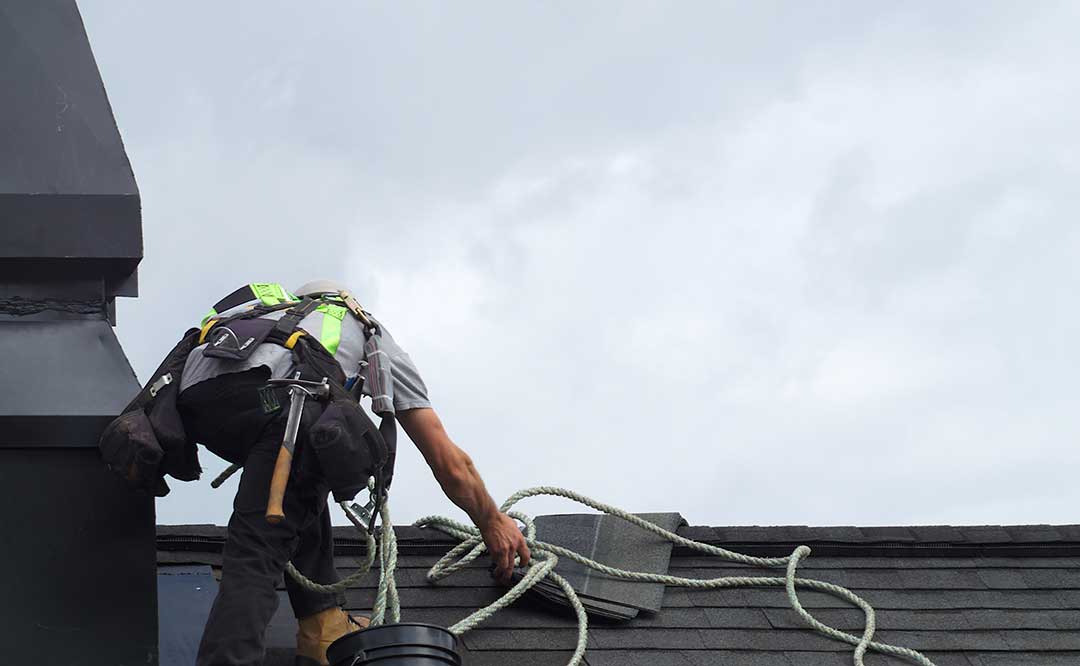
After a severe storm, look from the ground for missing shingles, exposed underlayment, displaced metal, damaged gutters, or branches resting on the roof. Avoid climbing up to inspect during wet, windy, or unstable conditions.
Hail can create small impact marks that are difficult to see. Repeated impacts may remove granules or weaken the surface without producing an immediate leak. Because roof damage can be subtle, indoor symptoms and roof-age information are useful along with a visual inspection.
Why leaves, moss, and moisture matter
Fall leaves can collect in valleys, behind chimneys, and along roof-to-wall intersections. These areas may hold moisture against roofing materials and restrict water flow. Leaves also enter gutters, where they can contribute to overflowing during heavy rain.
Moss and algae are more common where a roof remains damp or receives limited sunlight. Moss can lift shingle edges as it grows beneath them. Algae may mainly affect appearance, but heavy growth can signal persistent moisture or poor drainage.
Trees near a house can provide shade and help reduce summer heat, yet branches that touch the roof may scrape shingles, drop debris, or provide a path for animals. Dead branches are especially concerning before periods of high wind or heavy snow.
Which roof problems require prompt attention?
Some conditions should not be postponed because they can quickly lead to interior damage or safety hazards.
Prompt attention is warranted when there is:
- Active water entry during rain or snowmelt
- A large section of missing or displaced roofing
- A sagging roofline or ceiling
- Exposed electrical components near a leak
- A fallen branch or tree on the roof
- Extensive ice buildup near roof edges
- A damaged chimney, vent, or other roof penetration
For minor concerns, photographs from the ground and notes about when the problem appears can help identify patterns. Record whether water appears during heavy rain, melting snow, strong wind, or only after a long period of damp weather.
How regular observation helps extend roof performance
Weather-related roof maintenance is mainly about noticing changes early. Twice-yearly observations, especially after winter and after major storms, can identify issues before water reaches insulation, framing, ceilings, or walls.
Keep gutters and downspouts clear, trim branches that contact the roof, and watch attic spaces for dampness or unusual odors. Do not assume a roof is healthy solely because it has not leaked. Many roofing problems begin with weakened materials, blocked drainage, or small flashing defects that remain hidden until the right weather event occurs.
For households in Farmington, seasonal awareness is particularly useful because the roof must handle both cold-weather moisture and warm-weather expansion. Understanding how each season affects the roof makes it easier to distinguish normal aging from conditions that deserve prompt evaluation.
