
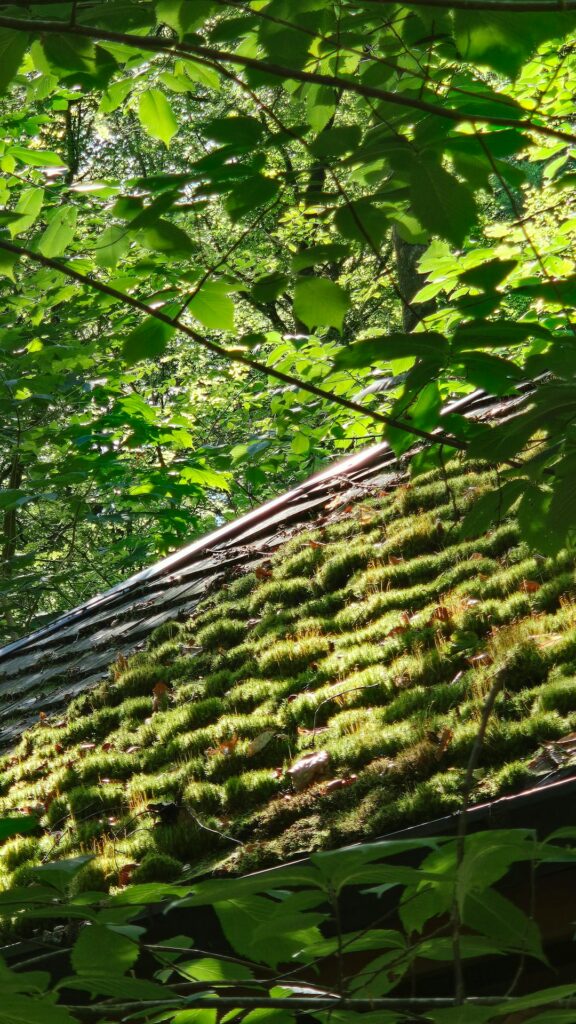
What does safe roof cleaning involve?
Safe roof cleaning means removing leaves, moss, algae, and surface grime without damaging the roofing material or creating a fall hazard. For most homeowners, the safest approach is to work from the ground or from a properly secured ladder and avoid walking on the roof unless the surface, slope, weather, and safety equipment make it genuinely suitable.
In Farmington, NY, roofs commonly face a mix of snow, rain, humidity, freezing temperatures, and spring debris. These conditions can encourage moss and algae growth, especially on shaded roof sections and areas beneath overhanging trees. Cleaning is useful, but it should not be treated as a routine task that requires climbing onto every roof.
When should a roof be cleaned?
The best time to clean a roof is during mild, dry weather when the roof surface is free of snow, frost, ice, and heavy dew. Late spring through early fall usually provides safer working conditions than winter or early spring.
Avoid roof cleaning during:
- Rain or strong wind
- Freezing temperatures
- Wet or icy conditions
- Extreme summer heat
- The period immediately after a storm
- Any time snow or ice remains on the roof
A dry, cloudy day is often preferable to intense sunshine. Cleaning chemicals can dry too quickly in direct heat, while wet weather makes shingles and ladders slippery.
Before cleaning, inspect the roof from the ground. Look for missing shingles, sagging areas, exposed underlayment, damaged flashing, loose gutters, or branches resting on the roof. These conditions indicate that cleaning could cause additional damage or make the work unsafe.
Can you clean a roof without climbing on it?
Yes. Ground-based cleaning is often the safest option for a residential roof. A garden hose with a gentle spray can rinse loose debris from a low roof edge, and a telescoping soft brush may help reach limited areas from a stable position.
Never use a high-pressure washer from the ground or roof. Pressure can strip protective granules from asphalt shingles, force water beneath overlapping materials, loosen flashing, and damage sealant around vents. It can also send debris into gutters, windows, landscaping, or nearby people.
For loose leaves and small twigs, a roof rake designed for the specific roofing material may be safer than climbing. Use it carefully and pull debris downward rather than dragging it across the roof surface. Aggressive scraping can remove granules or tear shingles.
How should moss and algae be removed?
Moss should not be pulled or scrubbed forcefully from shingles. Its roots can attach to the roofing surface, and rough removal may lift shingle edges or remove granules.
A safer process is to:
- Remove large loose debris gently.
- Apply a roof-safe cleaning solution according to its label.
- Allow the solution time to loosen or kill the growth.
- Rinse with low water pressure, moving downward toward the eaves.
- Repeat later if necessary rather than trying to remove everything in one session.
Use only a product specifically labeled for the roofing material. Asphalt shingles, wood shakes, metal roofing, and membrane roofs may have different cleaning requirements. Household cleaners, abrasive powders, and concentrated chemicals can discolor siding, harm plants, corrode metal, or damage roofing components.

Do not mix cleaning products. In particular, combining bleach with ammonia or acidic cleaners can produce dangerous fumes. Protect nearby plants with water before and after cleaning, and direct runoff away from ponds, vegetable gardens, and areas where pets may drink.
Is bleach safe for roof cleaning?
Some roof-cleaning methods use diluted bleach solutions, but bleach is not automatically safe for every roof or surrounding surface. It may affect painted metal, plants, exterior finishes, fasteners, and certain roofing materials. The concentration, application method, weather, and runoff control all matter.
If a product label does not clearly identify the roof material it is designed for, do not use it. Test any approved cleaner on a small, less visible area first. Stop if the surface changes color, becomes chalky, or loses granules.
A cleaning solution should be applied with a low-pressure sprayer rather than a pressure washer. Wear eye protection, gloves, long sleeves, and footwear appropriate for the ground conditions. Keep children and pets away from the work area until the roof and surrounding surfaces have been rinsed.
How can ladder work be made safer?
A ladder should stand on firm, level ground and be inspected before use. Keep the base clear of mud, ice, loose gravel, garden tools, and other objects that could shift.
For a leaning ladder, a common safety setup is a roughly four-to-one angle: the base is positioned about one foot away from the wall for every four feet of ladder length. The ladder should extend above the roof edge when it is being used for roof access. Do not stand on the top step or climb while carrying a bucket, hose, brush, or chemical container.
Use a tool belt or hoist materials separately so both hands remain available while climbing. Maintain three points of contact whenever possible. Never move or reposition a ladder while someone is on it.
A ladder is not a substitute for fall protection on a steep or high roof. Roof work becomes significantly more dangerous near the edge, around skylights, on multiple roof levels, or where the roof is difficult to see clearly from the ground.
When should you stay off the roof?
Stay off the roof if it is steep, wet, icy, unusually high, fragile, visibly damaged, or difficult to access safely. Also avoid climbing if you are uncomfortable with heights, have balance limitations, or cannot work with another adult present.
Roof surfaces can be slick even when they appear dry. Moss, algae, frost, and fine roof granules reduce traction. Snow and ice create additional hazards during the colder months, and falling debris can injure people below.
A roof with damaged shingles, structural sagging, exposed decking, loose gutters, or uncertain load capacity should not be treated as a do-it-yourself cleaning surface. In these situations, the hazard is not limited to slipping; stepping in the wrong area can worsen roof damage or cause a fall through a weak section.
What should be checked after cleaning?
After the roof is cleaned, inspect the ground, gutters, downspouts, siding, windows, and nearby plants. Look for loose shingle granules, damaged flashing, blocked downspouts, or chemical residue.
Clear leaves and moss from gutters by hand from a stable ladder position, using gloves and eye protection. Do not lean sideways to reach distant sections. Move the ladder instead.
If moss returns quickly, the cause may be persistent shade, damp debris, poor airflow, or overhanging branches. Trimming vegetation where appropriate and keeping gutters clear can reduce moisture buildup. Zinc or copper strips are sometimes used to limit future moss growth, but they must be installed in a way that does not damage roofing or create unsafe access.
A clean roof should still be inspected periodically, particularly after winter, heavy wind, or falling branches. Cleaning removes surface growth; it does not repair leaks, aging materials, or underlying ventilation problems.
